Hip-hop has always been about evolution.
New sounds, new cities, new faces.
But in 2026, something interesting is happening:
👉 The new generation is rising
👉 But the OGs never left
And somehow… both are dominating at the same time.
They Said “Real Rap Is Dead” — But Is It?
For years, the narrative was clear:
-
lyricism is fading
-
attention spans are shorter
-
algorithms are replacing artistry
But if you really look at the culture right now — that statement doesn’t hold up anymore.
Because while new artists are coming in strong, the foundation built by the OGs is not only alive…
It’s still leading.
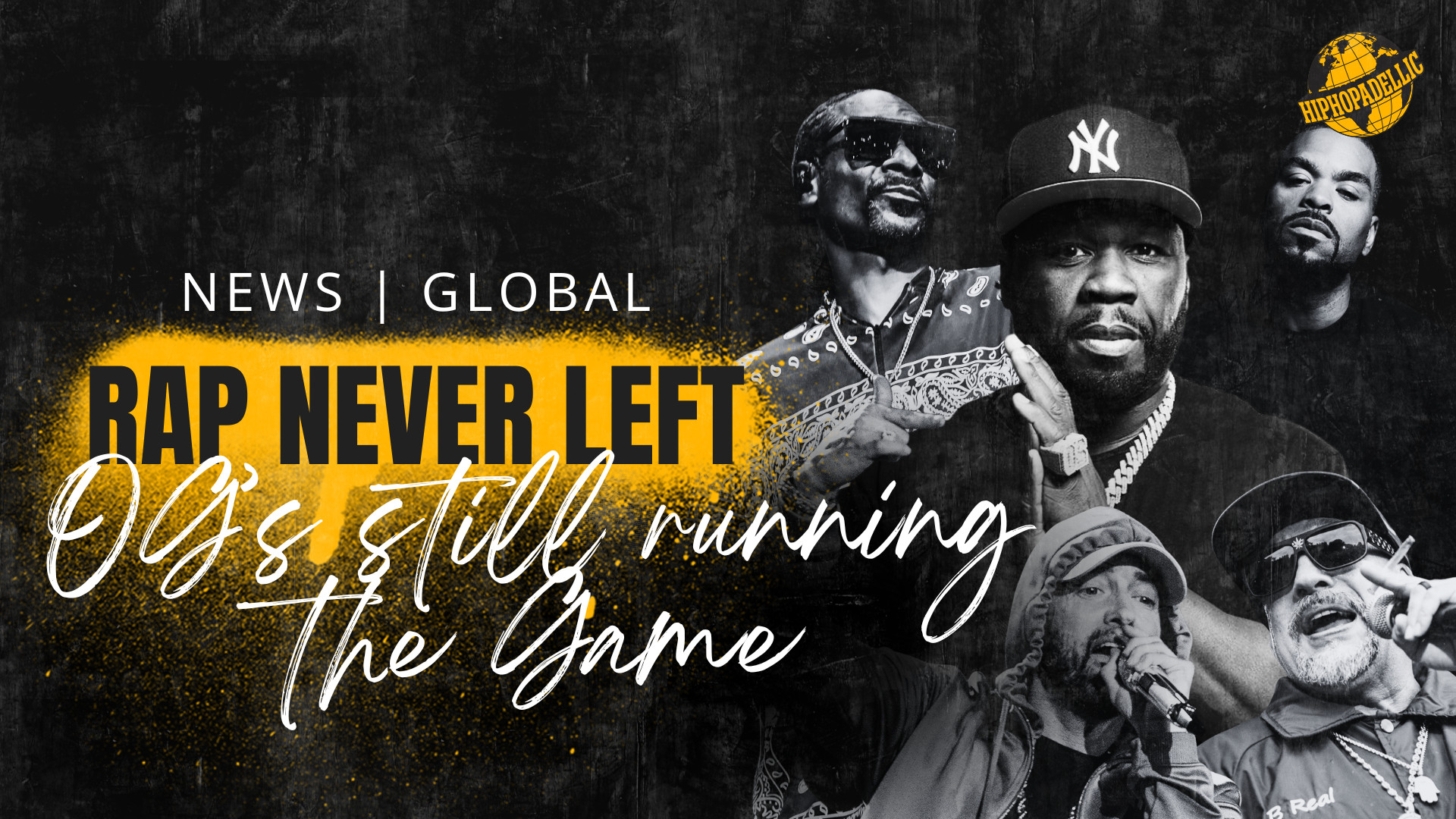
OGs Still Controlling the Game
Look at the facts:
-
Nas has been dropping critically acclaimed albums consistently in recent years
-
Eminem remains one of the most streamed artists globally
-
Snoop Dogg stays culturally relevant across music, media, and lifestyle
-
50 Cent dominates digital culture and entertainment
-
T.I. is preparing his final album Kill The King
- Joe & Jada are having one of the most popular Hip-Hop Podcasts worldwide
And it goes even further:
-
Legendary groups like Wu-Tang Clan are still selling out arenas and major shows worldwide in 2026, proving that their influence isn’t just historical — it’s still active and in demand.
Even artists tied to the roots of the culture, like Mobb Deep, continue to hold weight in the streets decades later.
This isn’t nostalgia.
This is longevity.
The New Generation Is Building on the Blueprint
At the same time, a new wave is pushing forward — but not by rejecting the past.
Artists like BigXthaPlug and movements like the upcoming 6WA project are paying homage to legends like Eazy-E, showing clear respect for the roots of the culture.
Meanwhile, collectives like Griselda are proving that:
- raw bars
- gritty production
- street authenticity
…still dominate when executed at a high level.
With producers like The Alchemist, Hit-Boy, and Havoc, the sound remains rooted in tradition while still evolving.
Bridging Generations Is the New Wave
One of the strongest signs of this shift is collaboration.
We’re seeing more and more moments where generations connect instead of compete:
-
Cypress Hill linking with Alemán
- Mac Miller appearing on the posthumous album of Big L (RIP Legends)
-
New artists openly crediting OGs as direct inspiration
-
Legacy acts working with younger producers and sounds
This isn’t separation anymore.
It’s alignment.
The Culture Never Reset — It Expanded
What we’re witnessing isn’t a “new era replacing the old one.”
It’s something different:
- multiple eras existing at the same time
OGs still setting standards
New artists building on that foundation
Global scenes adding new perspectives
Hip-hop didn’t restart.
It multiplied.
HIPHOPADELLIC Take
At HIPHOPADELLIC we see this moment as one of the most powerful phases in hip-hop history.
Because for the first time:
-
the pioneers are still active
-
the new generation is fully aware of the roots
-
and the global scene is stronger than ever
Real rap didn’t die.
It evolved, spread, and came back stronger — carried by both the ones who built it and the ones who grew up studying it.
The question is no longer:
- Old school vs new school
The real question is:
How far can this culture go when every generation moves together?