

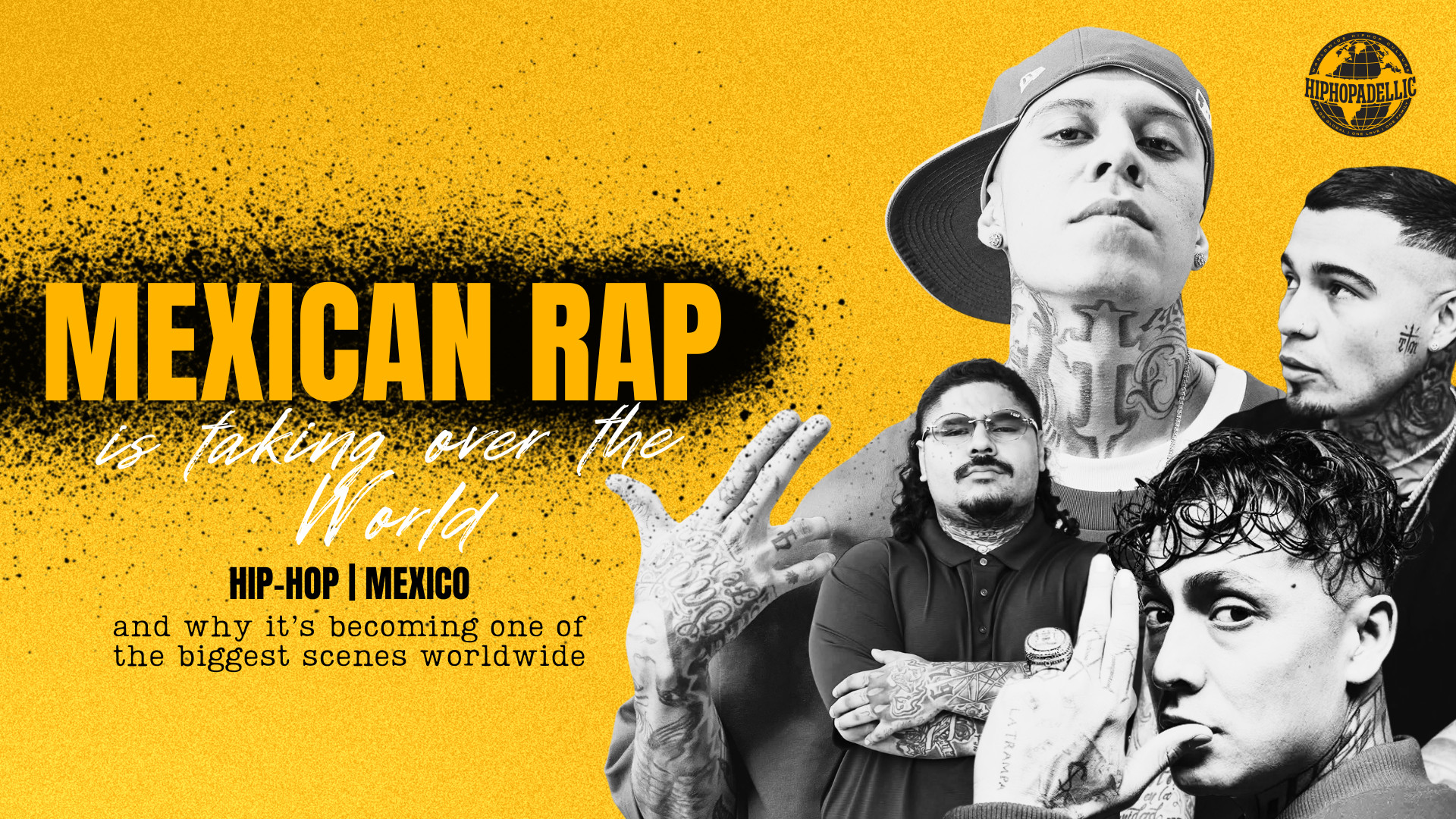

For years, Mexican rap was treated as a regional wave — strong locally, but rarely placed in global hip-hop conversations. That narrative doesn’t hold up in 2026 anymore.
Mexican hip-hop isn’t emerging.
It’s expanding.
From sold-out U.S. tours to heavyweight collaborations, artists from Mexico are no longer knocking on the door — they’re building their own global lanes.
From the Underground to International Stages
Artists like Alemán, Gera MX, Santa Fe Klan, and That Mexican OT represent different styles — but they share one thing: cross-border impact.
-
Alemán brings laid-back but sharp lyricism with U.S. and Latin collaborations.
-
Gera MX continues building a loyal international fanbase through consistency and touring.
-
Santa Fe Klan blends street realism with melodic depth and massive audience reach.
-
That Mexican OT merges Southern U.S. energy with Mexican identity, bridging two cultures in real time.
This isn’t accidental.
It’s cultural evolution.
Bilingual Energy Is the Future
One of the strongest weapons Mexican rap holds is fluid identity. Artists move between Spanish and English naturally, making the music accessible across borders.
The U.S. Latin audience is massive.
Mexico’s domestic audience is massive.
When you combine both — you’re not “regional” anymore.
This bilingual, bicultural positioning gives Mexican artists an advantage many other scenes don’t have.
Touring, Collaborations & Cultural Exchange
Mexican rappers are no longer limited to their home market. They are:
-
Touring heavily in the United States
-
Collaborating with U.S. artists
-
Appearing on international festival lineups
-
Building digital audiences beyond language barriers
And it’s not one-sided. The influence goes both ways. U.S. artists are increasingly tapping into Mexican rap culture — recognizing its authenticity, street credibility, and massive audience power.
This is no longer export.
This is exchange.
Why This Matters for Global Hip-Hop
Hip-hop has always been about local identity meeting global movement. Mexico’s rap scene proves that strong cultural roots don’t limit you — they amplify you.
The growth of Mexican rap signals something bigger:
-
Spanish-language rap can dominate without switching identity.
-
Cross-border collaboration is becoming normal.
-
Latin America isn’t just consuming hip-hop — it’s shaping it.
And in 2026, Mexico stands at the center of that shift.
HIPHOPADELLIC Take
At HIPHOPADELLIC we’ve been watching this movement closely and we’re consuming this beautiful art of rap since over decade. More than happy to see that Mexican rap isn’t just “up next” — it’s already active on the global stage.
With artists expanding their reach, building loyal fanbases, and staying culturally grounded, this feels less like a trend and more like a permanent power shift. And what right know even becomes more international are the Corridos Tumbados besides the whole Rap movement.
The question isn’t whether Mexican music will go global.
The question is:
How much bigger is it about to get?