

One Album, One Statement
Few artists have shaped hip-hop, soul and R&B the way Lauryn Hill did. And she did it with a single studio album that still sets the standard almost three decades later.
For HIPHOPADELLIC, her story is the clearest example of impact over volume. One record. One statement. A standard that never needed a sequel.
Before her solo work, Hill was a central voice of the Fugees alongside Wyclef Jean and Pras Michel. Their 1996 album The Score topped the Billboard 200 and won Hill her first two Grammy Awards. When the group split, she began building something that would separate her from that sound entirely.
She Built It In Kingston
Recording began in New York and New Jersey in September 1997, but the album found its identity when Hill moved the sessions to Tuff Gong Studios in Kingston, Jamaica, the studio founded by Bob Marley.
That move shaped the reggae and soul textures that run through the record. Hill worked with a collective of musicians known as New Ark, using live instrumentation and chasing authenticity instead of the commercial trends of the moment. Project supervisor Gordon “Commissioner” Williams oversaw the sessions, with Che Pope and James Poyser contributing to most of the tracks.
The Credit Question Behind The Album
The Kingston collaboration later became a legal dispute worth understanding, because it speaks to how hip-hop and soul are actually built.
In November 1998, months after release, New Ark, made up of Vada Nobles, Rasheem Pugh, Tejumold Newton and Johari Newton, filed a fifty-page lawsuit against Hill, her management and her label. They sought co-writing credit on thirteen of the album’s fourteen tracks. The only song left out was “To Zion,” the track about Hill’s son. The case was settled out of court in February 2001.
The Numbers That Made History
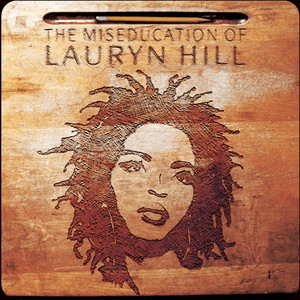
Released August 25, 1998, on Ruffhouse and Columbia, The Miseducation debuted at No. 1 on the Billboard 200. It sold 422,624 copies in its first week, breaking the first-week sales record for a female artist at the time.
The lead single, “Doo Wop (That Thing),” debuted at No. 1 on the Billboard Hot 100, making Hill the first female rapper to reach that spot. “Ex-Factor” and “Everything Is Everything” followed into the Hot 100 Top 40.
At the 41st Grammy Awards in 1999, Hill received ten nominations and won five in one night, including Album of the Year, Best New Artist and Best R&B Album. It was the first hip-hop album ever to win Album of the Year.
The proof came later. On February 16, 2021, the RIAA certified the album Diamond, ten million units, making Hill the first female rapper to reach that mark.
A Sound That Refused One Lane
The Miseducation moved between rap, soul and R&B because it was built that way from the ground up.
Hill rapped and sang across songs about love, identity, spirituality and growth. The live instrumentation from the Kingston sessions gave it a warmth that programmed records of the era did not have. The reggae and gospel roots were not references laid on top. They were structural.
That is why it reached far beyond hip-hop. GRAMMY.com has pointed to artists including Drake and Lizzo among those shaped by it.
Still Here, Decades Later
Hill never followed the usual release cycle. She has released very little recorded material compared to her peers, and The Miseducation remains her only solo studio album. It has not faded.
In 2026, Hill received the inaugural Living Legend Icon Award at the BET Awards, with SZA, Doechii, Nas, Doja Cat, Queen Latifah, Tems, Lizzo and Rapsody taking part in a tribute. Hill performed “Ex-Factor” at the ceremony. Earlier that year she performed at the Grammy tribute to Roberta Flack and D’Angelo.
HIPHOPADELLIC Perspective
Lauryn Hill’s story is simple at its core. One solo album was enough to influence three genres for nearly thirty years.
The numbers are historic. The influence is documented. But the reason it still matters is simpler than any certification or trophy.
It still sounds like someone had something to say.
And people are still listening.
One Love. One Family. One Culture.